





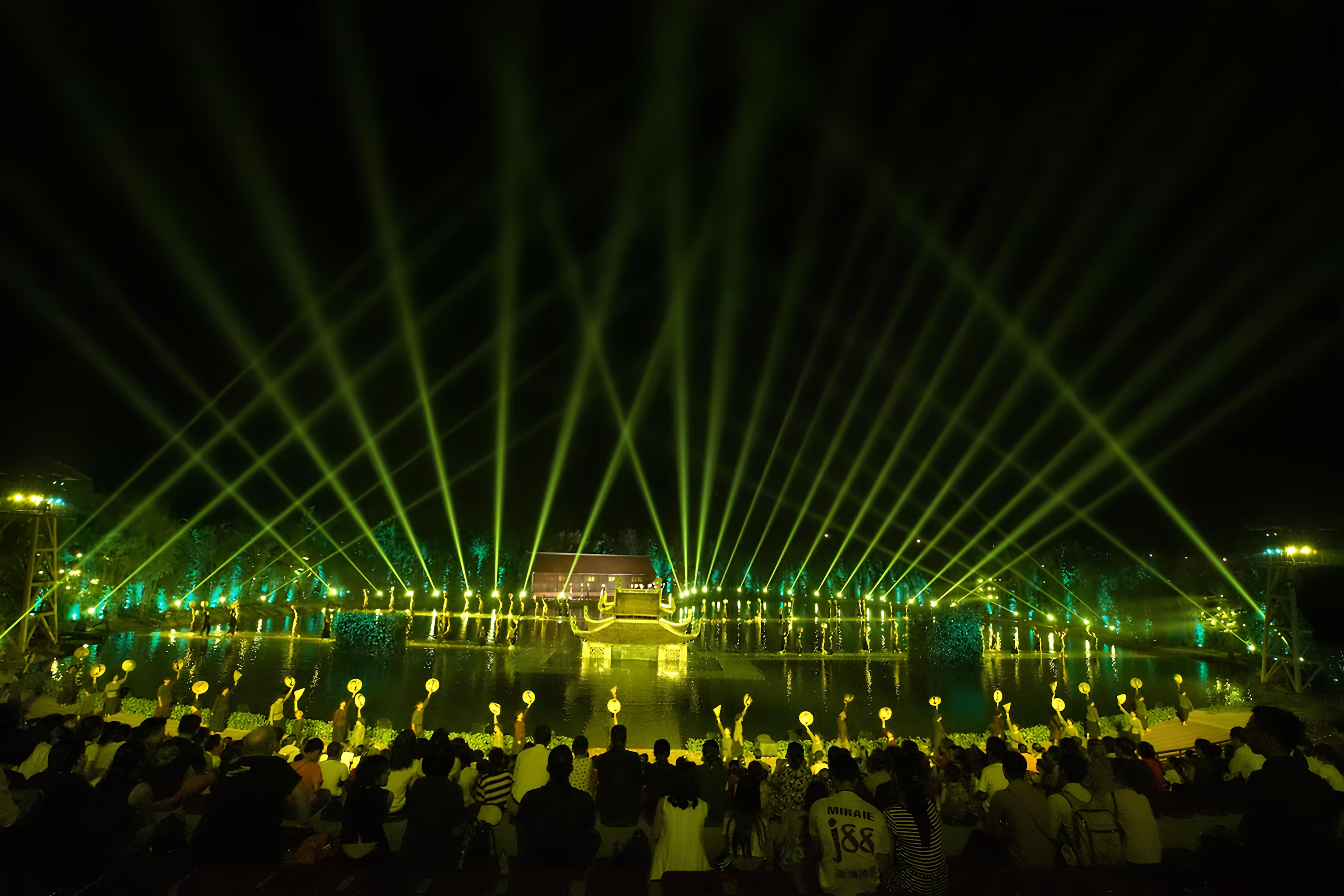
For Dream Studio, Once Upon A Time in Doai Province was not merely the first real-scene performance in Vietnam but also one of the pioneering projects laying the foundation for the concept of cultural industry in 2017. Developed as a journey to discover the cultural identity of the Northern Delta region, the project opened up a completely new approach in storytelling using space, natural landscape, and utilizing the farmers and local community themselves as an important part of developing and maintaining the project.
---
Unlike the traditional stage model, the entire project was built right on the land of Sai Son at the foot of Thay mountain, where nature, architecture, water surface, and indigenous life became an inseparable part of the performance language. With a 2,000-seat outdoor amphitheater facing a 1.75-hectare natural space and a 3,000-square-meter water stage, Once Upon A Time in Doai Province brought the concept of “real-scene performance” into practice for the first time in Vietnam, where nature was no longer a backdrop but became a structural component of the artwork.
The project was implemented over two years with the participation of nearly 140 local farmer-actors in Sai Son. Instead of entirely using professional actors, Dream Studio chose the very farmers attached to this land to tell the story about the life, labor, spiritual beliefs, and culture of their hometown. Thousands of practice hours transformed ordinary residents into master storytellers on the grandest stage of their lives, simultaneously creating a rare authenticity for the entire artwork.
---
Inspired by folk water puppetry plays and the life of Northern villages, the program recreated an original cultural space with images of banyan trees, river docks, communal house courtyards, village festivals, farming, the journey of learning, and the moral values that have shaped Vietnamese identity over centuries. The rustic, fairy tale story about the daily life of Northern villages from a thousand years ago was told through 17 folk water puppetry plays such as “Tễu Giáo trò (Teu's prologue and welcoming act)”, “Hội làng (Village festival)”, “Nông nghiệp cày cấy (Agricultural Life)”, “Vinh quy bái tổ (Return in triumph to ancestors' shrine)”. The content layers were connected into a continuous flow, reflecting the relationship between humans, nature, and community in the wet-rice civilization.
---
Music also played an important role in creating the identity for the work. The sound effect section was built on the combination of the resonance of traditional puppetry music, northern Chèo folk opera, and World Music, undertaken by the Master Fader group - composed of key musicians from the contemporary symphony orchestra Rhapsody Philharmonic. Far beyond its illustrative role, the music in the program was developed as an independent storytelling language layer, both evoking a familiar folk atmosphere and creating emotional depth and rhythm for the entire real-scene space. The harmony between traditional and contemporary materials allowed the audience to not only hear the ancient whisper of the Northern countryside but also feel the new vitality of the heritage when placed in a modern performance structure.
---
One of the outstanding marks of the project lay in combining the natural landscape with large-scale stage solutions. The real-scene architectural system was designed and built directly on the existing terrain, along with many performance effects that had never appeared in Vietnam at that time. Among them, a multi-ton, 20-meter-long communal house was made to run behind the bamboo row; from a depth of 10 meters at the bottom of Long Tri pond, the 10-ton original water pavilion amidst the water surface; high atop Thay mountain, dozens of lights shone like a halo, adorning the image of Holy Ancestor Tu Dao Hanh manifesting; and hundreds of lights simultaneously lit up the entire green bamboo forest, brightly reflecting across the vast lake surface, creating a special visual experience while still maintaining the rustic spirit of the Doai land.
---
After its launch, Once Upon A Time in Doai Province received special attention from experts, cultural researchers, media, and the tourism community. The project was considered an important milestone in the development of cultural industry products in Vietnam, simultaneously opening up new directions for exploiting indigenous culture through performance art.
For Dream Studio, Once Upon A Time in Doai Province is a testament to the belief that culture should not remain static in museums or history books but can be reborn into vivid experiences for the contemporary public. Through this masterpiece, Dream Studio continues to pursue the philosophy “National culture is human civilization”, turning traditional cultural values into inspiration for new experience models of the cultural industry, bringing Vietnamese culture to touch the emotions of global tourists.
